What is IVF?
In Vitro Fertilisation (IVF) is an assisted reproductive technology where eggs are retrieved from the ovaries and fertilised with sperm in a laboratory. The resulting embryos are cultured for 3-5 days before the best quality embryo is transferred to the uterus, where it may implant and develop into a pregnancy.
Since our founding in 1999, PTA Fertility Centre has helped thousands of patients achieve pregnancy through IVF. Our SASREG-accredited laboratory and experienced team ensure the highest standards of care at every stage of the process.
Is IVF Right for Me?
IVF may be recommended for the following indications:
- Tubal damage or blockage — When fallopian tubes are damaged, blocked, or absent (including after sterilisation), IVF bypasses the tubes entirely.
- Male factor infertility — Low sperm count, poor motility, or abnormal morphology. ICSI (intracytoplasmic sperm injection) can be combined with IVF to inject a single sperm directly into the egg.
- Endometriosis — Moderate to severe endometriosis that has not responded to surgery or other treatments.
- Ovulation disorders — When ovulation induction and IUI have been unsuccessful.
- Unexplained infertility — When all standard investigations are normal but pregnancy has not occurred after other treatments.
- Advanced maternal age — Women over 37-38 where time is a critical factor and more effective treatment is needed.
The IVF Process: Step by Step
Step 1: Ovarian Stimulation
The IVF cycle begins with hormone injections (gonadotropins) to stimulate the ovaries to produce multiple eggs rather than the single egg that normally develops each month. Stimulation typically lasts 10-14 days, with regular monitoring through blood tests and ultrasound scans to track follicle growth.
Step 2: Daily Injections & Monitoring
You will administer daily hormone injections (usually subcutaneous, using a small needle similar to those used by diabetic patients). These are self-administered at home after instruction from our nursing staff. Monitoring visits every 2-3 days allow us to adjust medication doses and determine the optimal time for egg retrieval.
Step 3: Trigger Injection
When follicles reach the appropriate size (typically 17-20mm), a trigger injection of hCG or GnRH agonist is administered to finalise egg maturation. Egg retrieval is scheduled exactly 36 hours after this injection.
Step 4: Egg Retrieval
Egg retrieval is performed under light sedation in our procedure room. A thin needle is guided through the vaginal wall using ultrasound to aspirate fluid from each follicle. The procedure takes approximately 15-20 minutes, and most patients recover within 1-2 hours. You will need someone to drive you home.
Step 5: Fertilisation
On the same day as egg retrieval, your partner provides a fresh semen sample (or frozen sperm is thawed). Our embryologist combines eggs and sperm in the laboratory. For male factor infertility, ICSI may be used — where a single sperm is injected directly into each mature egg using micromanipulation equipment.
Step 6: Embryo Culture & Hormone Support
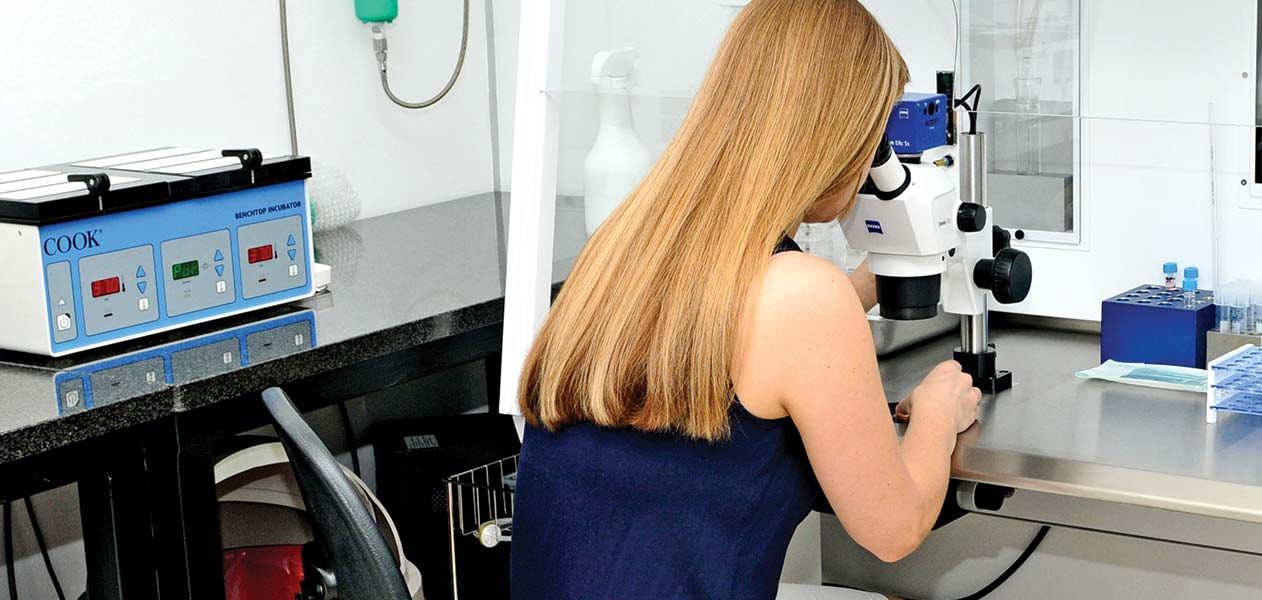
Fertilised eggs (embryos) are cultured in our incubators for 3-5 days. Our embryologists monitor development daily, assessing cell division and embryo quality. During this time, you begin progesterone supplementation (usually vaginal pessaries or injections) to prepare the uterine lining for embryo transfer.
Step 7: Embryo Transfer
The best quality embryo is transferred to the uterus using a thin, soft catheter — a painless procedure that takes just a few minutes and does not require sedation. If you have additional good quality embryos, these can be frozen (vitrified) for future use, eliminating the need for repeated stimulation cycles.
After Transfer: The Two-Week Wait
After embryo transfer, you continue progesterone support and wait approximately 12-14 days before a blood pregnancy test (beta-hCG). This is often described as the most emotionally challenging part of the process. Our team provides support and guidance throughout this period.
Optional: Embryo Freezing
Surplus good-quality embryos can be vitrified (flash-frozen) and stored for future use. Frozen embryo transfer (FET) cycles are simpler, less expensive, and avoid the need for repeated ovarian stimulation. Vitrification technology achieves survival rates of over 95% upon thawing.
Why IVF Sometimes Fails
It is important to understand that IVF does not guarantee pregnancy. Several factors influence success:
- Embryo quality — Not all embryos have the genetic potential to implant. Even embryos that appear morphologically normal may carry chromosomal abnormalities.
- Egg quality and age — Female age is the single most important predictor of IVF success. Egg quality declines significantly after age 37, and more sharply after 40.
- Ovarian response — Some women produce fewer eggs despite maximum stimulation (poor responders), reducing the number of embryos available.
- Chromosomal factors — The majority of IVF failures are due to chromosomal abnormalities in embryos that prevent implantation or lead to early miscarriage.
- Smoking — Active smoking reduces IVF success rates by up to 50%. We strongly advise stopping smoking at least 3 months before treatment.
- Body weight — Both underweight (BMI below 19) and overweight (BMI above 30) can reduce success rates. We may recommend weight optimisation before starting treatment.
Contributing Factors to Success
While we cannot control every variable, several factors are associated with better outcomes:
- Younger age at time of treatment (under 35 has the highest success rates)
- Good ovarian reserve (AMH levels and antral follicle count)
- Healthy lifestyle — balanced nutrition, regular exercise, adequate sleep
- Non-smoking status
- Normal BMI (19-30)
- Addressing underlying conditions before treatment (e.g., thyroid, hydrosalpinx)
Related Resources